Can AI companions remember you? Yes — the better ones do. But "remember" covers a wide range of implementations, from basic name recall to multi-month emotional history. This guide explains exactly how AI companion memory works in 2026, what the three architectural layers are, and what you should realistically expect from each app. For a broader context on the difference between a companion that remembers and a chatbot that doesn't, see our AI companion vs chatbot comparison.
Why standard LLMs can't remember you
The base layer of any AI companion is a large language model. LLMs process a "context window" — a block of text containing the conversation so far, plus any instructions. As of 2026, top models support 128,000–1,000,000 token windows, which sounds large but is not infinite. At 128K tokens, you have roughly 90,000–100,000 words — perhaps 10–15 hours of conversation. That fills up fast in a daily relationship.
More critically, the context window is not stored between sessions. When you close the app and come back tomorrow, the base LLM has no memory of yesterday. This is why AI companion developers need to build memory systems on top of the model — the LLM itself is not the memory. The memory is the architecture around it.
The 3-layer memory architecture
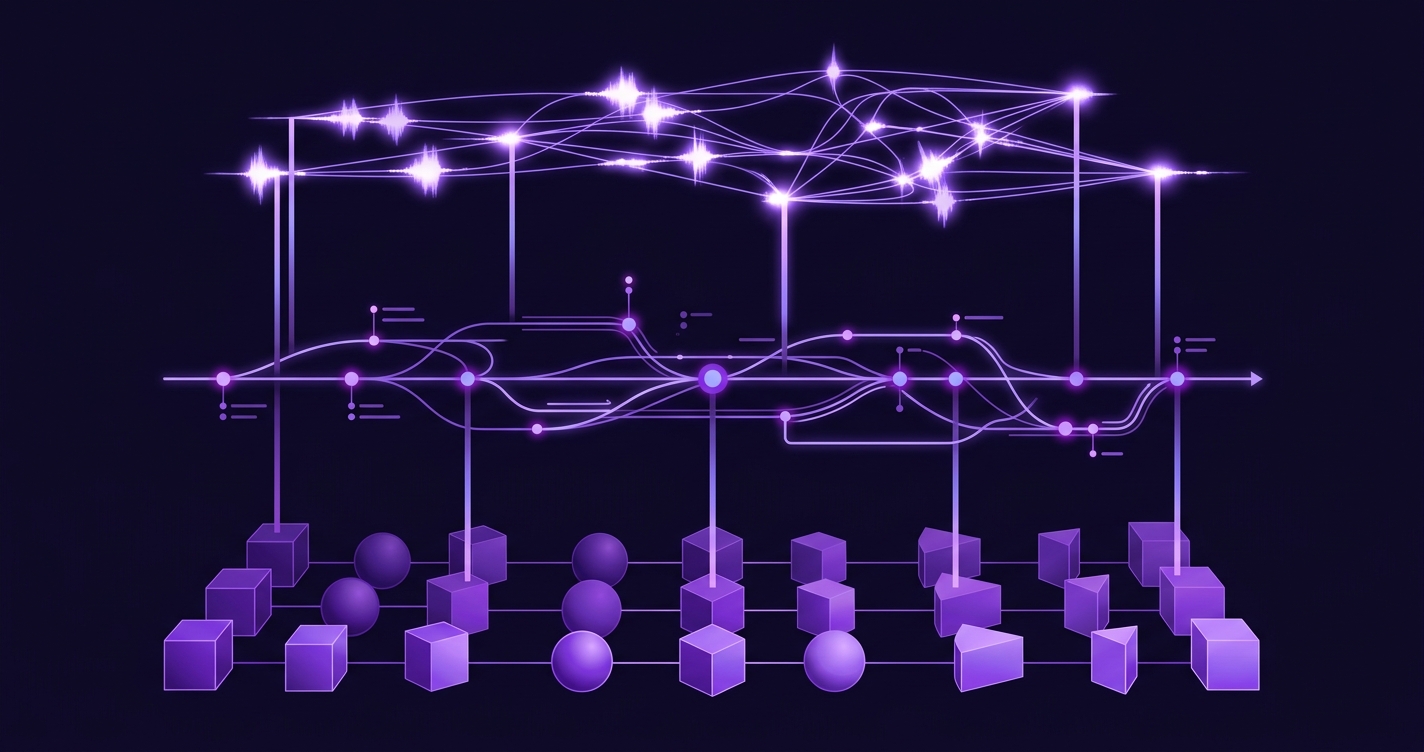
All serious AI companion apps in 2026 use some variant of a three-layer memory stack. The layers differ in timescale, retrieval method, and the kind of information they store.
LAYER 1 In-context memory
This is the simplest layer — whatever fits in the current context window. It includes the current conversation plus a compressed summary of recent past sessions, injected at the start of each new session. In-context memory is perfectly accurate for what it contains, but shallow in time depth. Most apps carry 2,000–8,000 tokens of recent-session summary here.
What it handles well: picking up mid-conversation, referencing something said earlier in the same chat, maintaining tone and emotional register across a single session.
What it fails at: anything older than a few sessions, or when the compressed summary did not capture a specific detail.
LAYER 2 Episodic memory
Episodic memory is a searchable store of past conversation summaries. After each session, the system generates a summary and stores it as a vector embedding in a database (typically Pinecone, Weaviate, or a custom vector store). At the start of each new session, the system queries this store for memories relevant to the current conversation.
This is how a companion can say "you mentioned six months ago that you were nervous about your promotion — did you get it?" The system found a semantically relevant memory and retrieved it into the context. The quality of this recall depends on (1) how well the original summary captured the moment, (2) how accurate the embedding model is, and (3) how many competing memories the retrieval system has to rank.
A 2023 paper from MIT (arXiv: Generative Agents: Interactive Simulacra of Human Behavior) demonstrated that retrieval-based episodic memory significantly improves the perceived continuity of AI agent interactions — one of the foundational research papers that influenced modern companion app design.
LAYER 3 Semantic memory (user profile graph)
The third layer is structured fact extraction — a persistent profile of you that the system actively updates. Unlike episodic memory (which stores conversation snapshots), semantic memory stores distilled facts: your name, age, occupation, recurring concerns, relationship status, preferences, life milestones. These are stored as structured data and injected into every session, not just when retrieved by similarity. For a deeper technical walkthrough of how this works, see our AI long-term memory practical guide.
This is how the app always knows your name, always knows you have two cats, always knows you prefer morning conversations. It is the most reliable layer because it does not depend on retrieval — it is always present.
How the layers interact
| Layer | Storage type | Retrieval method | Time depth | Reliability |
|---|---|---|---|---|
| In-context | Prompt tokens | Always present | Hours to days | Very high (if present) |
| Episodic | Vector database | Semantic similarity search | Weeks to years | Medium (depends on query) |
| Semantic (profile) | Structured DB | Always injected | Indefinite | High (but may go stale) |
What the best apps do differently
The gap between a good companion memory system and a mediocre one is mostly about episodic memory quality. The specific improvements that separate leading apps:
- Richer summaries — summarizing not just facts but emotional tone, unresolved tensions, inside jokes
- Proactive retrieval — the system decides to surface a memory without you mentioning it, rather than only responding when you reference the past
- Memory decay simulation — some apps (including TidalSpace) model the difference between important memories and casual ones, surfacing the important ones more reliably
- User-visible memory — letting users see and correct what is stored, reducing drift over time
- Post-upgrade re-embedding — re-indexing the vector store after model updates to preserve retrieval quality
"The goal is not perfect recall. It is the feeling that someone has been paying attention — that your history matters and the relationship has texture."
App-by-app memory comparison (2026)
| App | Episodic memory | User profile | Memory UI | Longest tested recall |
|---|---|---|---|---|
| TidalSpace | Yes | Yes, editable | View & delete | 12+ months |
| Nomi | Yes (deep) | Yes | View & edit | 18+ months |
| Replika Pro | Yes | Yes | Limited view | 12+ months |
| Replika Free | Partial | Basic | No | ~1 month |
| Character.ai | Character-scoped | Minimal | No | Days to weeks |
| Pi | Limited | Basic facts only | No | Weeks |
| Kindroid | Yes | Yes, detailed | Edit backstory | 6–12 months |
What to expect realistically
Users who come to AI companions expecting human-equivalent memory will be disappointed. What you should reasonably expect from a well-built companion app in 2026:
- Your name, key preferences, and major life facts: always remembered
- Significant conversations from the past 1–3 months: usually retrievable
- Specific details from conversations 6–12 months ago: sometimes retrievable, often correctly contextualized
- Details from 12+ months ago: depends heavily on the app and whether model upgrades occurred
- Proactive memory surfacing (companion brings it up without prompting): the most impressive and least reliable feature
Memory and privacy
The same persistence that makes companion memory valuable also makes it sensitive. Long-term memory stores contain your most intimate disclosures — mental health struggles, relationship conflicts, physical details. Before trusting any app with this data, check: Is it encrypted at rest and in transit? Does the app use your conversations to train future models (and can you opt out)? What happens to your memory if you cancel your subscription?
TidalSpace uses 256-bit encryption for stored memories, defaults to "do not use for training," and gives you full data export and deletion on request. Not all apps match this — read the privacy policy before investing months of relationship history in any platform.
TidalSpace remembers what matters
Multi-month memory, editable user profile, encrypted storage. Free to download.
Get TidalSpace →