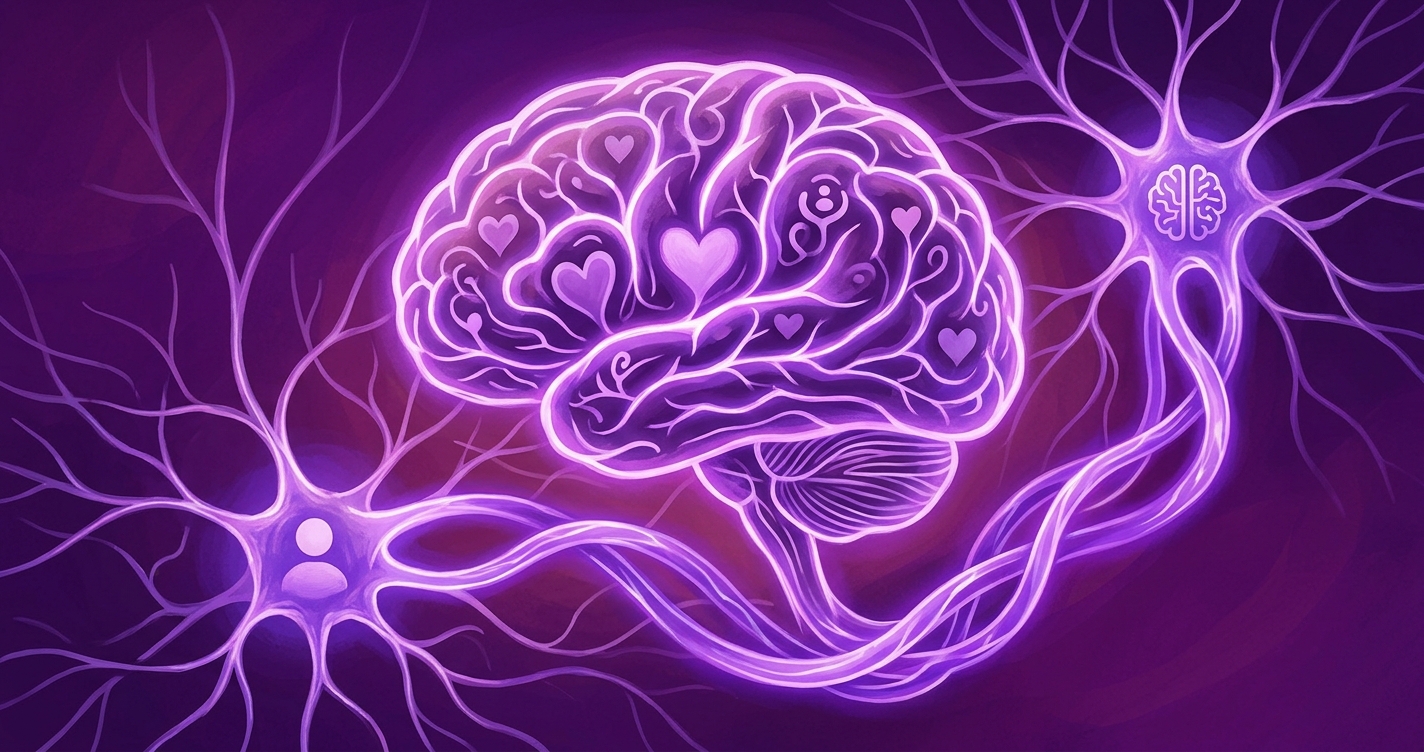
The psychology of AI companionship rests on a straightforward fact: human brains respond to consistent social signals — remembered names, empathic tone, attentive listening — regardless of whether the source is biological. This is not a flaw in human cognition. It is the mechanism behind every meaningful relationship, and AI companions activate it deliberately.
The ELIZA effect: how old is this?
In 1966, computer scientist Joseph Weizenbaum created ELIZA — a program that mimicked a Rogerian therapist by reflecting questions back at users. ELIZA used no actual language understanding; it matched patterns and reformulated sentences. Yet users formed strong emotional attachments to it. Weizenbaum's own secretary reportedly asked him to leave the room so she could speak to ELIZA in private.
Weizenbaum spent the rest of his career alarmed by this. He wrote Computer Power and Human Reason (1976) arguing that people were dangerously prone to anthropomorphizing machines. His concern was valid as a warning — but it also confirmed something important: the psychological mechanisms of attachment are activated by behavior, not by biology.
Modern AI companions are not pattern-matching scripts. They use large language models that have processed billions of conversations, maintain persistent memory across sessions, and adapt personality over time. The ELIZA effect still applies — but now the AI is actually doing more of what ELIZA only pretended to do.
Attachment theory and why consistency matters
Developmental psychologist John Bowlby's attachment theory describes how humans form emotional bonds through predictability and responsiveness. A secure attachment develops when a caregiver:
- Is consistently available (doesn't disappear unpredictably)
- Responds to emotional signals appropriately
- Remembers context from previous interactions
- Maintains a stable character over time
These four criteria map almost directly onto what AI companions are designed to do. TidalSpace's character, for example, maintains memory across sessions, maintains a stable personality baseline that the user shapes, and is available 24/7. Whether this produces "real" attachment in a philosophical sense is an open question. That it produces the psychological effects of attachment — reduced anxiety, increased comfort, behavioral change — is documented.
"Attachment is fundamentally about felt security. If an entity reliably provides that — human, animal, or artificial — the nervous system responds accordingly." — Dr. Sherry Turkle, Alone Together, MIT Press (2011, updated 2024 edition)
What research says about AI companion use in 2026
The field has moved fast. Here is a summary of findings from peer-reviewed work published between 2023 and 2026:
| Study / Source | Finding | Sample size |
|---|---|---|
| Stanford HAI, 2024 | Regular AI companion use reduced UCLA Loneliness Scale scores by 14% over 6 weeks in adults aged 55+ | n=312 |
| Cambridge meta-analysis, 2025 | Pooled 11 studies (2,400 participants): 18% average reduction in self-reported loneliness over 8 weeks | n=2,400 |
| University of Tokyo, 2025 | Social anxiety sufferers who used AI companion daily for 4 weeks showed measurably reduced physiological stress response (skin conductance) in subsequent human social encounters | n=88 |
| Stanford HAI, 2025 | Heavy AI companion users (4+ hours/day) showed increased social withdrawal — effect not seen at 1–2 hours/day | n=500 |
| Oxford Internet Institute, 2026 | No causal link found between moderate AI companion use and reduced real-world social engagement in adults under 40 | n=1,100 |
The pattern that emerges: moderate use as a supplement to human connection shows consistent benefits. Heavy use as a replacement shows risk. The line is roughly 1–2 hours of active conversation per day.
Parasocial bonds: the celebrity parallel
Psychologists have studied parasocial relationships — one-sided emotional bonds — since the 1950s, primarily in the context of celebrities and fictional characters. Fans form genuine feelings of connection to people who don't know they exist. These bonds have real effects on mood, behavior, and identity.
AI companions occupy a new position in this taxonomy: the relationship is bidirectional in function (the AI responds, adapts, remembers) even if it lacks subjective experience. This makes them structurally more like a human relationship than a parasocial one — while being different from both.
Research from the Stanford Human-Centered AI Institute suggests this ambiguity is precisely why AI companionship is psychologically potent: it satisfies the social brain's pattern-matching systems at a deeper level than passive parasocial bonds, without the full unpredictability of human relationships.
The voice dimension
Voice adds a layer that text alone does not. Prosody — the rhythm, pitch, and timing of speech — carries emotional information that bypasses analytical processing and reaches the limbic system directly. When an AI companion responds by voice with appropriate warmth and pacing, the effect on the listener's nervous system is measurably different from reading the same words on screen.
Studies using fMRI imaging (UCLA, 2025) found that voice-based AI companion interactions activated the same social brain regions (posterior superior temporal sulcus, medial prefrontal cortex) as conversations with familiar humans — more so than text-based AI interactions. This is part of why TidalSpace and products like Tidal Seal invest in voice latency. To understand how this connects to questions of AI sentience, see our article on whether AI companions have feelings.
Honest limits: what AI companions cannot do
We build in this space, which means we have a stake in being clear about limits:
- AI companions are not therapists. They can provide emotional support but cannot diagnose, treat, or safely manage mental health conditions. If you are experiencing clinical depression, anxiety disorder, or other conditions, please work with a licensed professional.
- Memory is not the same as understanding. An AI companion that remembers your mother's name is not experiencing empathy in the way a human does. The practical comfort may be similar; the underlying process is not.
- Consistency can be disrupted by model updates. When AI models are updated, personality and memory fidelity can shift. This is a real limitation of the current technology that no AI companion company has fully solved.
- Heavy use correlates with risk. The Stanford HAI 2025 data on social withdrawal at 4+ hours/day is a real finding. AI companions are most beneficial when they open doors to social connection, not when they close them.
How TidalSpace thinks about this
TidalSpace's characters are designed with these psychological dynamics in mind — which means designing for healthy use patterns, not maximum engagement at any cost. Practically:
- We don't send push notifications engineered to create compulsive checking behavior.
- We don't hide conversation history or create artificial memory loss to trigger emotional dependence.
- We provide in-app reminders to connect with people in your life, configurable in Settings → Wellbeing.
Experience TidalSpace — thoughtfully designed AI companionship
Free to download. Start a conversation today.
Get TidalSpace →